
If you’ve ever had a toothache bad enough to keep you up at night, you know it’s impossible to ignore. Maybe you tried ibuprofen and hoped it would go away, but it didn’t. For a lot of residents across Orem, Provo, and the broader Utah County area, that lingering pain eventually leads to one diagnosis: a tooth infection that needs root canal therapy.
The words “root canal” still carry an unfair reputation. Most people dread hearing them, picturing something painful and drawn-out. The reality? Root canal therapy has come a long way, and for millions of patients every year, it’s the procedure that stops the pain, not causes it. A skilled dentist in Orem can complete most root canals in one or two comfortable appointments, leaving you with a healthy, functional tooth that’s built to last.
“Root canal therapy doesn’t create pain. It ends it — and saves the tooth you’d otherwise lose.”
What Happens Inside an Infected Tooth?
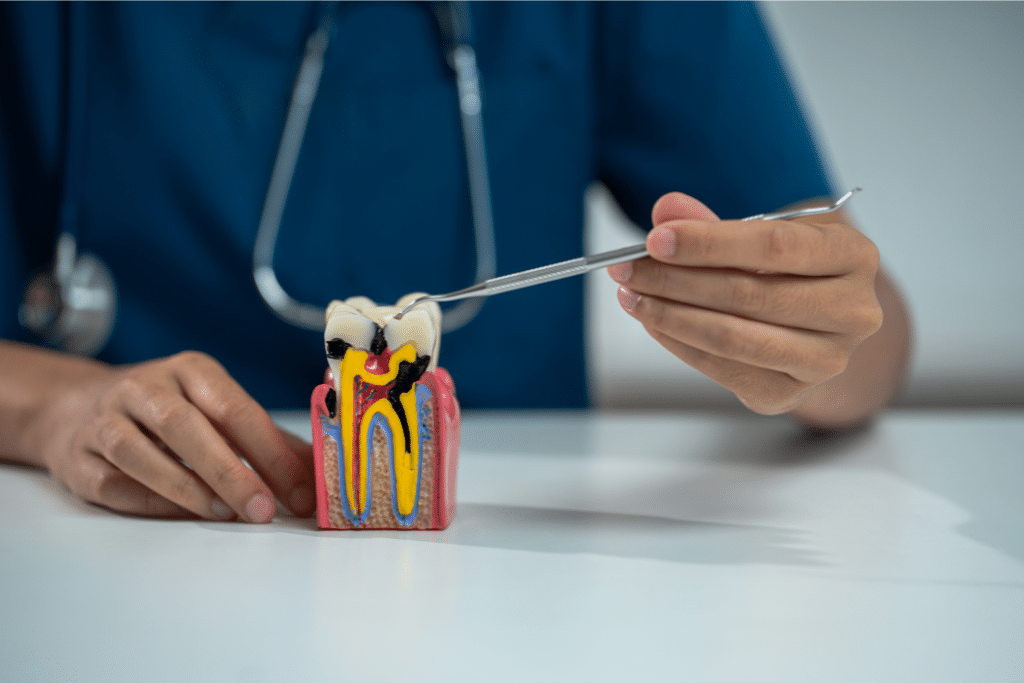
Each tooth has more going on beneath the surface than most people realize. At the core of every tooth sits a chamber of soft tissue called the dental pulp, a bundle of nerves, blood vessels, and connective tissue that helps the tooth develop and sense temperature or pressure. Once the tooth is fully mature, this pulp isn’t strictly necessary for the tooth to function, but it remains in place and vulnerable to infection, which is why a dentist carefully evaluates and treats any issues affecting it.
When bacteria reach the pulp through deep decay, a crack in the enamel, or a traumatic injury the infection spreads quickly. The tissue becomes inflamed, and because there’s no room for that swelling inside the rigid tooth structure, the pressure builds. That’s the source of the intense, throbbing pain people describe. Left untreated, the infection doesn’t stay contained to the tooth. It can migrate into the surrounding jawbone and, in serious cases, spread to nearby tissues.
Root canal therapy interrupts that process by removing the infected pulp, cleaning the interior of the tooth thoroughly, and sealing it off so bacteria cannot re-enter. The tooth’s outer structure is preserved, and after a crown is placed over it, it functions exactly like a healthy natural tooth.
Warning Signs That Shouldn’t Be Ignored
Tooth infections don’t always announce themselves dramatically at first. Some of the symptoms develop gradually, which is why people in the Orem area are encouraged to schedule a dental visit at the first sign of something unusual rather than waiting. Common indicators that root canal therapy may be needed include:
- Persistent, throbbing toothache that worsens when you bite down or apply pressure
- Prolonged sensitivity to hot or cold that lingers well after the temperature source is removed
- Visible darkening of a tooth, which often signals damage to the internal tissue
- Swelling, tenderness, or a pimple-like bump on the gum near the affected tooth
- Pain that radiates into the jaw, ear, or neck on the affected side
Not every toothache means you need a root canal, but any of these symptoms warrants a prompt evaluation. Early treatment is almost always simpler, less costly, and more comfortable than waiting.
What the Root Canal Procedure Actually Involves
Understanding what happens during a root canal takes away a lot of the anxiety surrounding it. Modern techniques, combined with effective local anesthesia, make the procedure feel far more routine than its reputation suggests closer to getting a filling than anything dramatic.
Examination and X-Ray
The dentist takes digital X-rays to assess the extent of the infection and map out the anatomy of the root canals before treatment begins.
Local Anesthesia
The area is fully numbed so you feel little to nothing during the procedure. Most patients are surprised by how comfortable this stage is.
Pulp Removal and Cleaning
A small opening is made in the crown of the tooth. The infected pulp is removed, and the canals are carefully shaped and disinfected with specialized instruments.
Sealing the Tooth
The cleaned canals are filled with a biocompatible material called gutta-percha to prevent reinfection, then sealed with a temporary or permanent filling.
Crown Placement
A custom dental crown is fitted over the treated tooth to restore full strength and protect the underlying structure for years to come.
Why Saving the Tooth Matters for Your Long-Term Health
When a tooth is extracted rather than treated, it sets off a chain reaction that most patients don’t anticipate. The gap left behind causes neighboring teeth to drift gradually, disrupting your bite and making certain foods difficult to chew. The jawbone in that area begins to shrink over time because it no longer receives the stimulation that a tooth root provides. Replacing a missing tooth with an implant or bridge while certainly possible adds expense and additional procedures that could have been avoided entirely.
Root canal therapy preserves what you already have. That’s a principle that resonates with families throughout Utah County, where people tend to value practical, long-term thinking. Keeping your natural tooth is almost always the better choice, both medically and financially.
Whether you’re a student at UVU, a family raising kids in a Vineyard neighborhood, or someone who’s called Orem home for decades, finding a reliable Orem dentist who explains your options clearly and keeps you comfortable throughout the process makes all the difference. Root canal therapy, when performed by an experienced provider, has a success rate well above 95% and can allow a treated tooth to last a lifetime with proper care.
Recovery after a root canal is typically mild. Some tenderness in the jaw and gum tissue for a day or two is normal and easily managed with over-the-counter pain relievers. Most people return to work or daily routines the next day without any significant discomfort. Your dentist in Orem will give you clear aftercare instructions and check in on your healing to make sure everything is progressing smoothly.
Don’t Wait for the Pain to Get Worse
At The Dental Center our goal is simple: to keep your smile healthy and your experience comfortable whether it’s a routine cleaning or a root canal that’s been on your mind. We’re proud to be a trusted dentist in Orem for families across Utah County, and we’d love to help you get the relief you deserve. If you’re experiencing tooth pain, sensitivity, or swelling, call us today or book your appointment online. Your natural tooth is worth saving and so is your peace of mind.
Frequently Asked Questions
Is a root canal painful?
Not during the procedure. Local anesthesia keeps you comfortable throughout. The pain you feel before treatment from the infection itself is what a root canal is designed to stop.
How long does a root canal take?
Most cases wrap up in a single appointment of 60–90 minutes. Complex molars may need a follow-up visit.
Can I drive myself home after a root canal?
Yes, if only local anesthesia is used — which is standard. If sedation is involved, arrange a ride ahead of time.
What happens if I skip the treatment and the tooth gets worse?
The infection will spread into the bone, neighboring teeth, or surrounding tissue. What starts as a toothache can become a serious health issue. Early treatment is always the safer, simpler choice.