
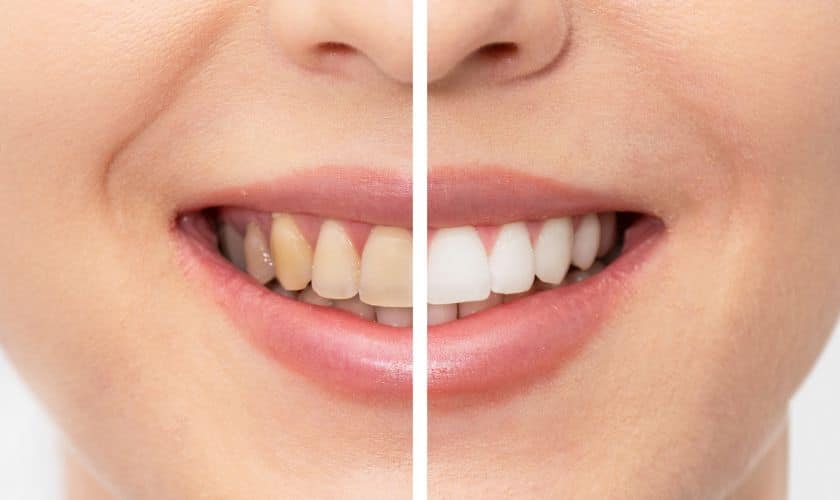
A bright, white smile is often associated with good oral health and hygiene. However, various factors can lead to tooth discoloration, causing aesthetic concerns for many individuals. Let’s discuss the common causes of tooth discoloration and provide insights into effective prevention strategies to maintain a radiant smile.
Common Causes of Tooth Discoloration:
Poor Oral Hygiene:
Neglecting regular oral care routines, such as brushing and flossing, can lead to the accumulation of plaque and stains, resulting in tooth discoloration over time.
Tobacco Use:
Smoking or using tobacco products introduces tar and nicotine, causing stubborn stains that can penetrate tooth enamel and lead to yellow or brown discoloration.
Consumption of Staining Foods and Beverages:
Certain foods and drinks, such as coffee, tea, red wine, berries, and highly pigmented sauces, contain chromogens that can stain teeth.
Aging:
As we age, the enamel on our teeth naturally wears down, revealing the yellowish dentin beneath, contributing to a gradual change in tooth color.
Genetics:
Genetic factors can influence the thickness and color of tooth enamel, making some individuals more prone to discoloration than others.
Medical Treatments:
Certain medications, such as tetracycline antibiotics, can cause intrinsic discoloration if taken during tooth development or for an extended period.
Dental Trauma:
Trauma or injury to the teeth can cause discoloration, either immediately or over time, as a result of internal bleeding or damage to the pulp.
Prevention Strategies for Tooth Discoloration:
Maintain Optimal Oral Hygiene:
Regular brushing, flossing, and professional cleanings help prevent the accumulation of plaque and surface stains.
Limit Staining Foods and Drinks:
Consume staining foods and beverages in moderation, and consider using a straw to minimize direct contact with teeth.
Quit Smoking or Tobacco Use:
Quitting smoking and tobacco products not only benefits overall health but also prevents the development of stubborn tobacco stains on teeth.
Practice Good Dietary Habits:
Include crunchy fruits and vegetables in your diet, as they can help naturally clean teeth and stimulate saliva production.
Consider Professional Teeth Whitening:
Professional teeth whitening procedures, performed by a dentist, can effectively remove stubborn stains and brighten your smile.
Stay Hydrated:
Drinking water helps rinse away debris and dilutes the impact of staining substances, promoting overall oral health.
Use Whitening Toothpaste:
Choose a toothpaste with whitening properties to help maintain a brighter smile and reduce surface stains.
Regular Dental Checkups:
Schedule regular dental checkups to identify and address potential causes of discoloration early on, ensuring prompt and effective intervention.
Conclusion:
Understanding the common causes of tooth discoloration empowers individuals to make informed choices for maintaining a vibrant and healthy smile. By adopting good oral hygiene practices, making mindful dietary choices, and seeking professional dental care when needed, you can take proactive steps to prevent tooth discoloration and enjoy the confidence that comes with a bright, white smile.