



Losing a tooth — or several — changes more than your smile. It changes how you eat, speak, and feel about yourself. If you live in Provo and are weighing your options, you’ve likely heard about dental implants and dentures. Understanding dental implants vs. dentures and which option actually fits your life in Provo takes more than a quick internet search. It takes honest, patient-centered guidance. That’s exactly what this article provides.
Understanding Your Options: Implants, Dentures, and Bridges
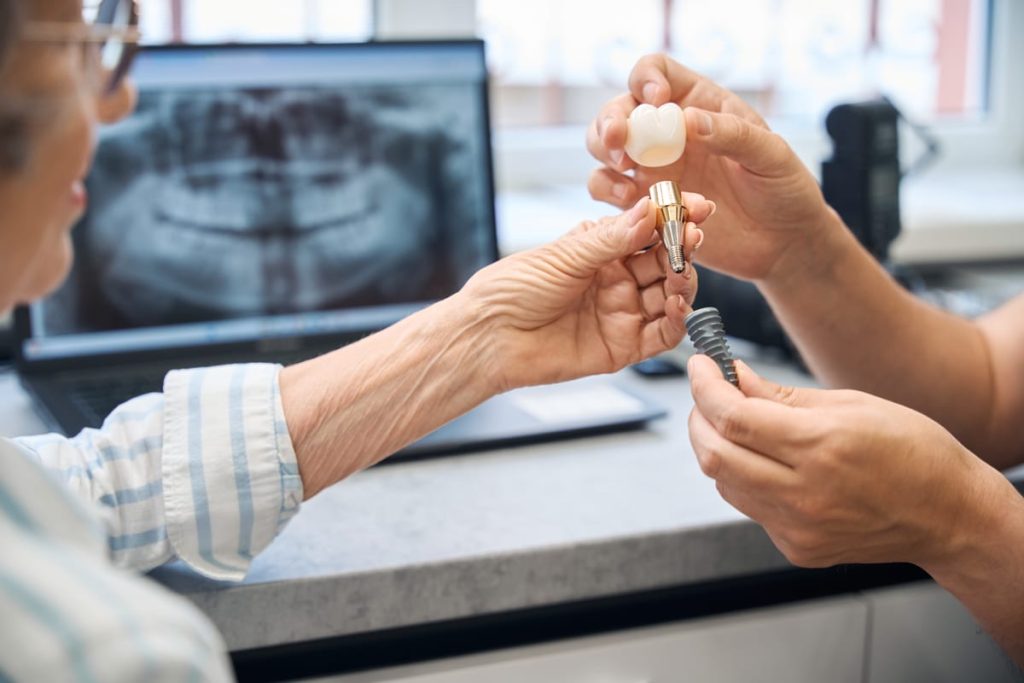
Before comparing, it helps to understand what each option actually is. Dental implants are titanium posts surgically placed into your jawbone. They act as artificial roots that permanently support a crown, bridge, or full arch of teeth.
Dentures are removable appliances that replace missing teeth. They rest on your gums and can replace a few teeth (partial dentures) or an entire arch (full dentures). Bridges fill a gap by anchoring to the teeth on either side of the missing space.
Each option works. But each one fits a different kind of patient, lifestyle, and long-term goal. Knowing the difference helps you make a confident, informed decision with your dentist.
Dental Implants vs. Dentures: Key Differences That Matter in Provo
Here’s where many patients get stuck — both options restore your smile, but they do it very differently. Implants are permanent. They fuse to your jawbone through a process called osseointegration. This makes them feel and function just like natural teeth.
Dentures, on the other hand, are removable. They require adhesives or clasps to stay in place. Over time, they may shift, click, or require relining as your jawbone changes shape.
Consider these key differences side by side:
- Stability: Implants stay fixed; dentures may move during eating or speaking
- Bone health: Implants stimulate the jawbone; dentures allow bone loss over time
- Maintenance: Implants are brushed like natural teeth; dentures require nightly removal and soaking
- Longevity: Implants can last a lifetime with proper care; dentures typically need replacement every 5–10 years
- Feel: Implants mimic natural teeth; dentures may feel bulky or loose
- Cost upfront: Implants cost more initially; dentures are less expensive at the start
No single option wins for every patient. The right choice depends on your health, bone density, budget timeline, and personal preferences.
Who Is a Good Candidate for Dental Implants?
Dental implants are an excellent long-term investment for the right patient. Ideal candidates have healthy gums, sufficient jawbone density, and no uncontrolled health conditions. Non-smokers also tend to heal better and experience fewer complications.
If you’ve been missing teeth for a long time, bone loss may already be present. In some cases, a bone graft can restore enough volume for implant placement. Dr. Douglas B. Ball evaluates each patient individually to determine what’s possible.
You may be a strong implant candidate if you:
- Are in good overall health
- Have one or more missing teeth
- Want a permanent, low-maintenance solution
- Are committed to excellent oral hygiene
- Prefer a restoration that feels like a natural tooth
Implants are not ideal for growing adolescents or patients with certain medical conditions. A thorough consultation at The Dental Center will reveal whether implants are right for you.
When Dentures Might Be the Better Fit
Dentures aren’t outdated — they’re a practical, accessible solution for many patients. If significant bone loss has already occurred, dentures may be the more realistic starting point. They’re also worth considering when multiple teeth need replacing across a full arch.
Modern dentures fit better than ever. Precision-crafted materials and improved adhesives have made them more comfortable and natural-looking. Implant-supported dentures — a hybrid option — combine the stability of implants with the coverage of dentures.
Dentures may work best for you if:
- You need to replace an entire arch of teeth
- Bone loss makes implant placement difficult without grafting
- You prefer a lower upfront cost
- You want a faster timeline to a complete smile
A good dentist won’t push one option over another. The goal is finding what genuinely fits your life, budget, and health — not what’s easiest to sell.
What About Dental Bridges?
Bridges deserve mention in this conversation. A dental bridge replaces one or a few missing teeth by anchoring to the healthy teeth on either side. Unlike implants, no surgery is required. Unlike dentures, bridges are fixed and non-removable.
Bridges work well when the adjacent teeth are healthy enough to support a crown. However, they do require reshaping those neighboring teeth — even if they’re otherwise healthy. Over time, the lack of a root beneath the bridge can still lead to bone loss in that area.
Bridges offer a middle-ground option. They’re less invasive than implants but more stable than dentures. Dr. Ball can help you weigh whether a bridge makes sense given your unique tooth loss situation.
Making the Decision: What Provo Patients Should Ask Their Dentist
Before your consultation, it helps to know what questions to bring. The right conversation leads to the right decision. Don’t walk in expecting a quick answer — expect a thorough evaluation.
Ask your dentist:
- Do I have enough bone density for implants?
- Would I need a bone graft first?
- How long will the full process take?
- What will maintenance look like long-term?
- What are the risks for my specific health situation?
At The Dental Center, Dr. Ball takes time to explain every option clearly. Provo patients deserve honest, unhurried guidance — not a one-size-fits-all recommendation. Your smile is personal. Your treatment plan should be too.
While you’re exploring your smile goals, it’s also worth knowing that options like Teeth Whitening Provo can complement your restoration by brightening your remaining natural teeth. And if a damaged tooth is causing pain, Root Canal Therapy Provo may help save the tooth before tooth loss becomes unavoidable.
Conclusion: Your Best Option Is the One That Fits Your Life
There’s no universal winner in the dental implants vs. dentures debate. The best choice depends on your health, lifestyle, bone structure, and goals. What matters most is that you make an informed decision with a dentist who listens.
Dr. Douglas B. Ball and the team at The Dental Center in Orem serve patients throughout Provo and Utah County. Whether you’re leaning toward implants, dentures, or a bridge — or you simply don’t know yet — a consultation is the right first step. Book Now to schedule your appointment with our team.
Frequently Asked Questions
How long does the dental implant process take?
The implant process typically takes several months from start to finish. After the titanium post is placed, the bone needs time to fuse around it — usually three to six months. Once healed, the final crown is attached. The total timeline varies based on your individual healing and whether additional procedures like bone grafting are needed.
Can dentures be converted to implant-supported dentures later?
Yes, in many cases dentures can be upgraded to implant-supported dentures down the road. This hybrid option uses implants to anchor and stabilize a denture, improving comfort and reducing slipping. Talk with Dr. Ball about whether this transition is realistic given your current bone health.
Do dental implants require special care?
Implants don’t require special tools or complicated routines. You brush and floss them just like natural teeth. Regular dental cleanings and checkups are still essential. Good oral hygiene and avoiding habits like smoking help implants last for decades.
Are dentures noticeable to other people?
Modern dentures are designed to look natural and match your facial structure. When properly fitted, most people won’t notice you’re wearing them. However, poorly fitted dentures can shift or click — another reason professional fitting and regular checkups matter.
What happens to the jawbone if I don’t replace a missing tooth?
When a tooth root is missing, the jawbone in that area begins to shrink over time. This process is called bone resorption. It can change the shape of your face and make future tooth replacement more complicated. Dental implants are the only tooth replacement option that stimulates the jawbone and prevents this bone loss.